Infrastructure

Infrastructure
The Department of Electronics and Instrumentation Engineering has modern infrastructure that is regularly upgraded to meet student needs.

Softwares
Keil-MDK - 25 users MATLAB(Campus Licence) - 120 users LabVIEW -50 users MULTISIM - 50 users COMSOL- 25 Users, XILINX -25 users, SIEMENS EDA Tools (Mentorgraphics) -25 users

Department Library
The Department Library is occupies a unique place in academic and research activities of the Department.

Carpet Area
Total Area in Sq Meters 2560
Laboratories
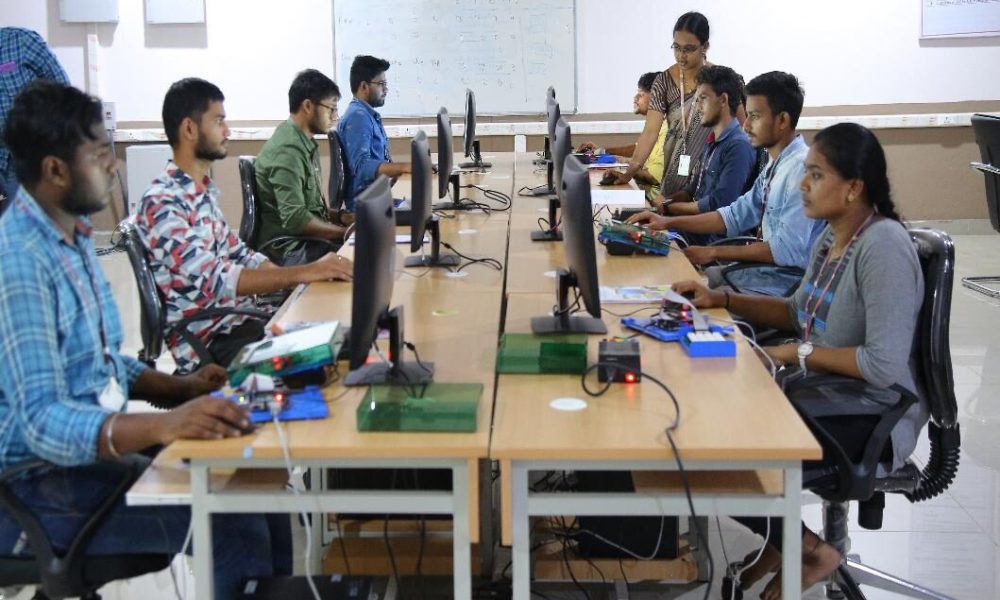
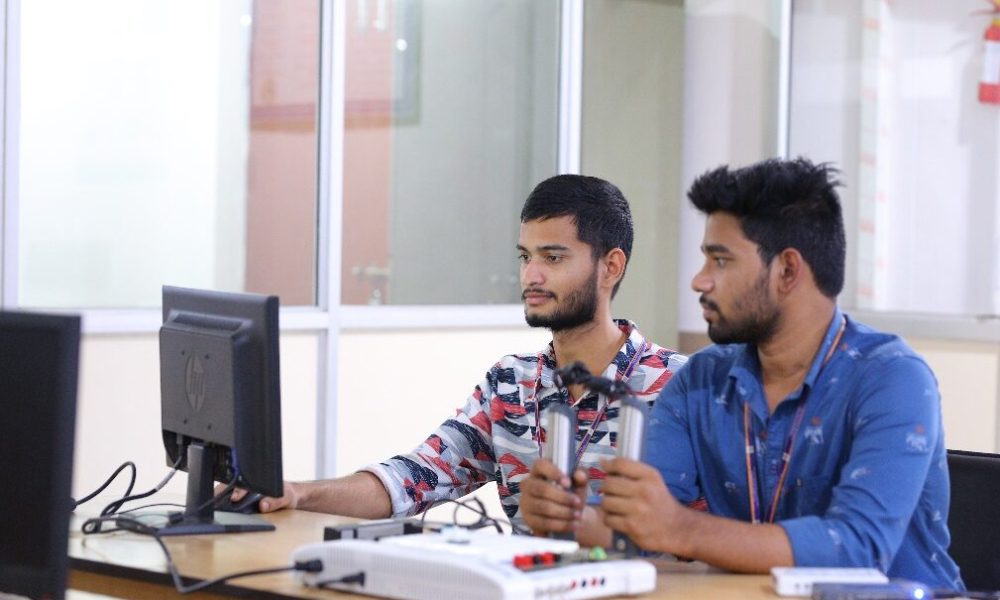
The Advanced Instrumentation Laboratory is a state-of-the-art facility designed to provide students with hands-on experience in modern test, measurement, and control platforms. The lab is equipped with LabVIEW software, NI DAQ cards, programmable test and measurement systems, and versatile hardware platforms including NI myDAQ, NI myRIO, Digilent sensors, and STM32Cube with Cortex-M7 boards for embedded applications. Students are trained in Virtual Instrumentation, real-time data acquisition, and advanced measurement techniques. The lab also supports RTOS (Real-Time Operating System) concepts using Cortex-M7 hardware boards, enabling learners to develop and test embedded real-time applications. Various skill-based and curriculum-oriented courses such as Virtual Instrumentation, Advanced Instrumentation Lab-I, Advanced Instrumentation Lab-II, and RTOS skill development courses are conducted in this laboratory, fostering practical knowledge, problem-solving skills, and industry readiness in the domains of instrumentation, embedded systems, and real-time computing.
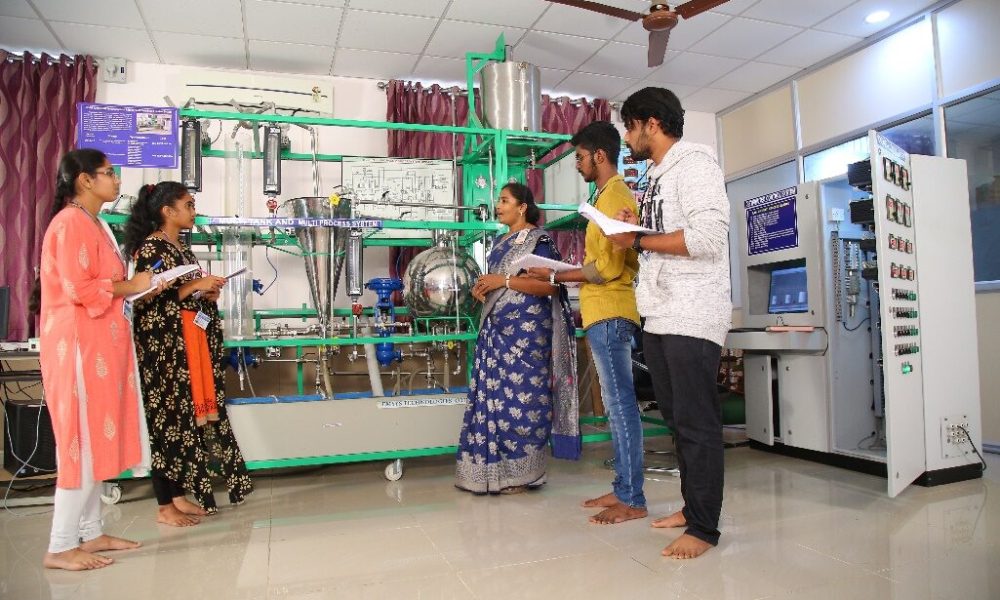
The Automation Laboratory is a specialized facility designed to train students in industrial automation, control, and smart manufacturing systems. It is equipped with PLCs from leading manufacturers such as Siemens, ABB, and Delta, along with Siemens automation software platforms for programming and process simulation. The lab hosts a variety of hardware setups to teach real-world automation, including PLC-based elevator control, temperature control, labelling machine, bottle filling machine, conveyor belt control, stamping machine, and a 3-axis drilling machine. In addition, an IoT-enabled pressure monitoring station, Honeywell DCS, and an integrated plant with multiple sensors and process tanks provide students with exposure to distributed and networked control systems used in modern industries. Core courses such as PLC Programming Lab and Automation Lab are conducted in this facility, preparing students with practical skills in automation, industrial control, and Industry 4.0 practices.
The Microcontrollers and Embedded Systems Laboratory is designed to provide students with comprehensive training in microprocessor and microcontroller programming, interfacing, and embedded system design. The lab is equipped with Keil software tools, 8086 hardware trainer kits with peripherals, 8051 microcontroller boards, ARM LPC2148 development boards, and Cortex-M3 hardware platforms to support hands-on learning. Advanced tools such as logic analysers and SEGGER debugging hardware are available to facilitate real-time program analysis, hardware debugging, and performance evaluation. Students gain practical skills in low-level programming, peripheral interfacing, and embedded application development. Key courses conducted in this laboratory include Microprocessors and Interfacing Lab, Microcontrollers Lab, and Embedded Systems & IoT Lab, enabling learners to build a strong foundation for careers in embedded systems, IoT applications, and system-level design.
The Analog and Digital Circuits Laboratory is equipped with modern tools and platforms to provide students with practical exposure to circuit analysis, design, and simulation. The facility includes CROs, function generators, and arbitrary waveform generators for testing and analysis of analog and digital signals. For circuit simulation and verification, the lab is equipped with NI Multisim software for SPICE-based simulations. For digital system design and implementation, the laboratory houses Xilinx Vivado tools, BASYS 3 boards, and ZYBO SOC boards, enabling students to design, simulate, and implement FPGA-based systems. The laboratory supports a wide range of courses, including Electronic Devices Lab, Digital Electronics Lab, and specialized skill development courses such as Digital System Design using FPGA, preparing students for advanced work in electronics, digital design, and VLSI systems.
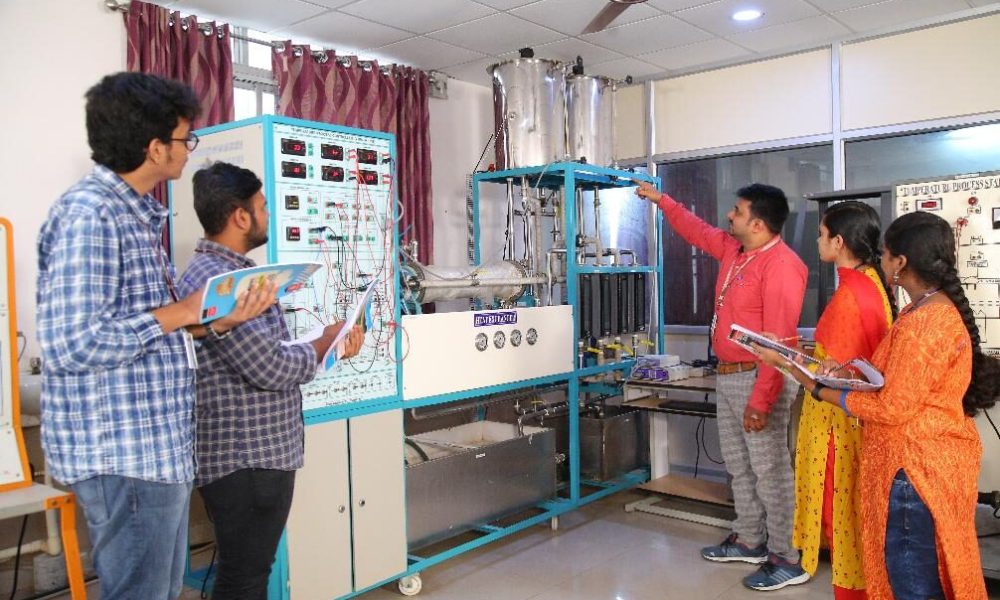
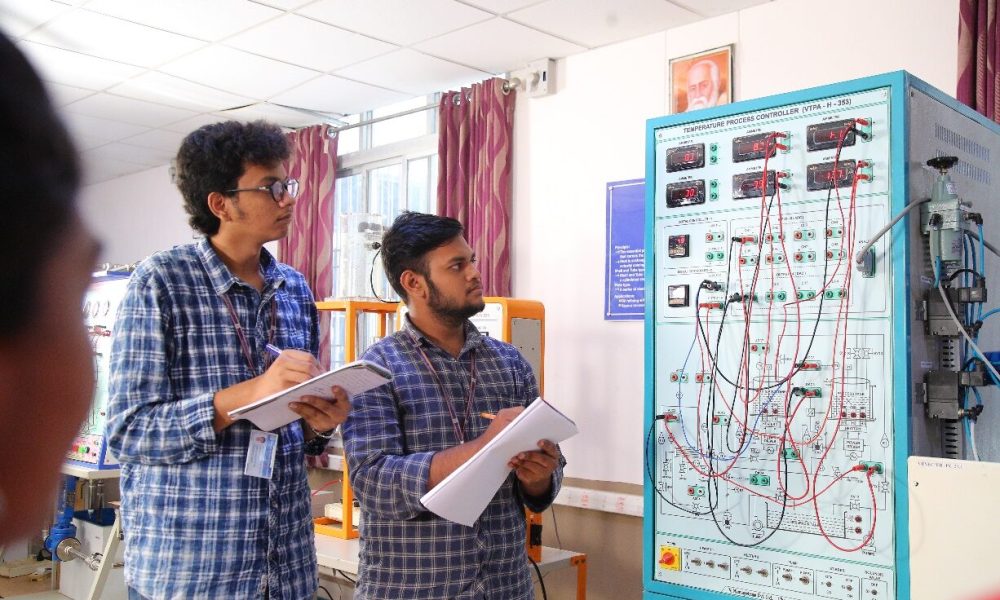
The Process Control Laboratory is designed to provide students with hands-on experience in modelling, analysis, and control of industrial processes. The lab is equipped with advanced process stations, including pressure, temperature, flow, level, and pH control systems, along with a heat exchanger setup for studying multi-variable process dynamics. Through these experimental platforms, students learn process characteristics, tuning of controllers, system response analysis, and implementation of control strategies relevant to real-time industrial environments. Core courses such as Process Control Lab and Control Systems Lab are conducted in this facility, enabling students to bridge theoretical concepts with practical applications in automation and process industries.
The Transducers and Measurements Laboratory provides a comprehensive platform for students to study the principles, characteristics, and applications of various sensors and measurement systems. The facility is equipped with CROs, function generators, spectrum analysers, bridges, ultrasonic flow transmitters, pressure measurement setups, speed measurement systems, and LVDT-based displacement measurement units.To support modern sensor interfacing and prototyping, the lab is integrated with Arduino boards and sensors, enabling students to design and test smart measurement systems. Additionally, the laboratory houses COMSOL software with 28 high-performance computing systems for simulation and modelling of physical systems and sensor designs.Key courses such as Transducers Lab, Measurements Lab, and Sensor Designing Labs are conducted here, fostering practical skills in experimental measurement, sensor technology, and system-level simulation.
The Innovation Laboratory is a dedicated facility created to encourage creativity, problem-solving, and hands-on learning among students. It is equipped with Arduino boards, Raspberry Pi boards, STM32NUCLEO IoT boards, and sensor bundles, enabling rapid prototyping and experimentation with embedded systems and IoT applications. To support end-to-end project development, the lab also features open-source software tools, a PCB printing machine, and essential test and measurement hardware, allowing students to design, implement, and validate their own hardware solutions .Unlike traditional laboratories, this facility is left open for students to carry out innovative projects, academic projects, and proof-of-concept development, fostering a culture of research, innovation, and entrepreneurship.