
About The Department
The Department of Mathematics was established in 1977 with the vision of providing a strong mathematical foundation to engineering graduates and addressing the evolving demands of engineering and technology at both national and international levels.
The department began with a modest number of courses and has steadily expanded in response to the growing importance of mathematics across diverse scientific and technological domains. Today, it comprises 21 dedicated faculty members offering more than 19 courses across Degree, Undergraduate (UG), and Postgraduate (PG) programs.
The faculty members are actively engaged in research and academic excellence, contributing significantly through publications in reputed national and international journals, conference proceedings, book chapters, and patents. They are also involved in guiding research scholars across various universities. The department has successfully completed three UGC Minor Research Projects, reflecting its commitment to research and innovation.
Currently, the department has 17 faculty members holding Ph.D. degrees, while 4 faculty members are pursuing doctoral research, demonstrating a strong academic culture and continuous professional development.
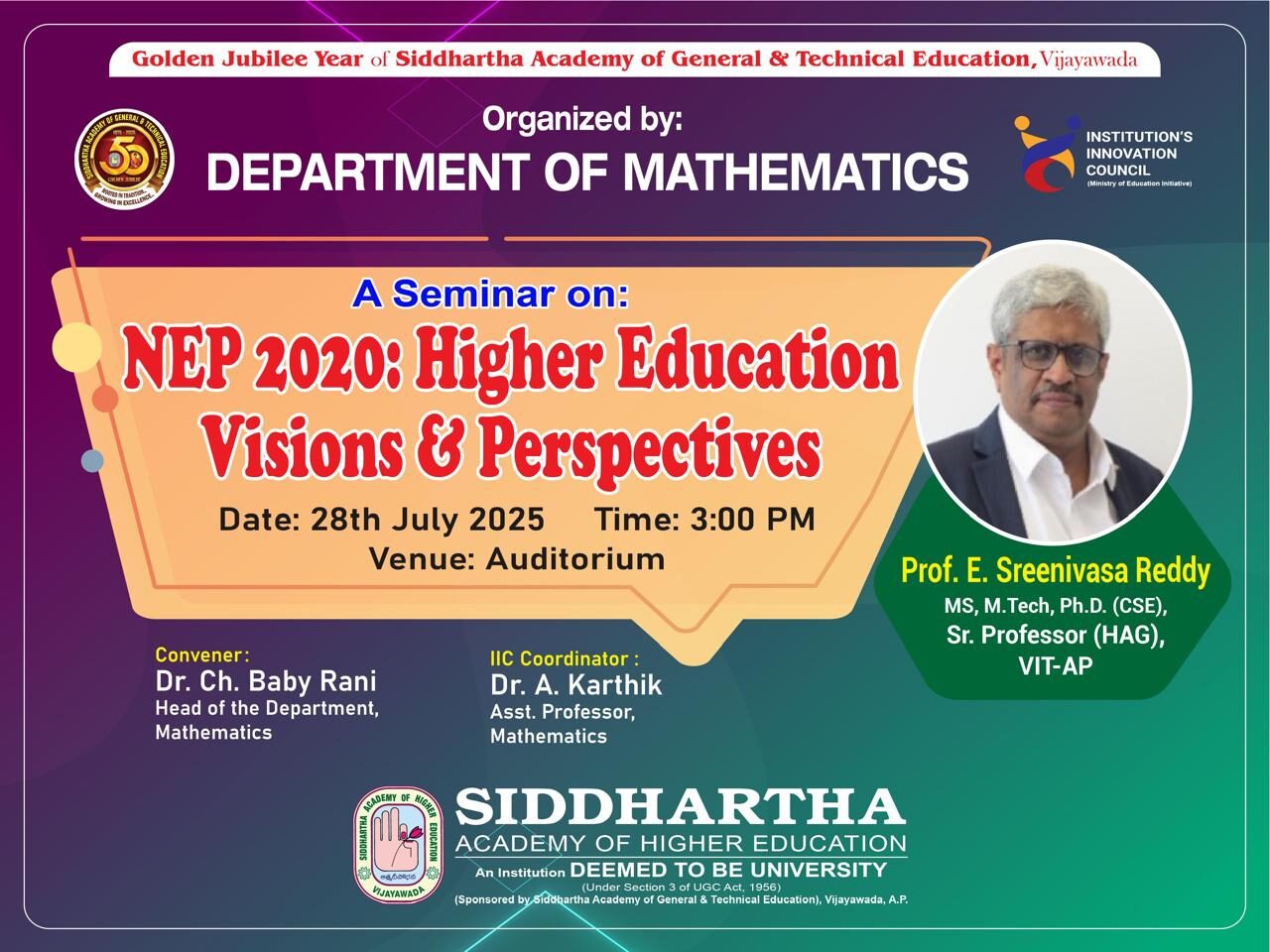
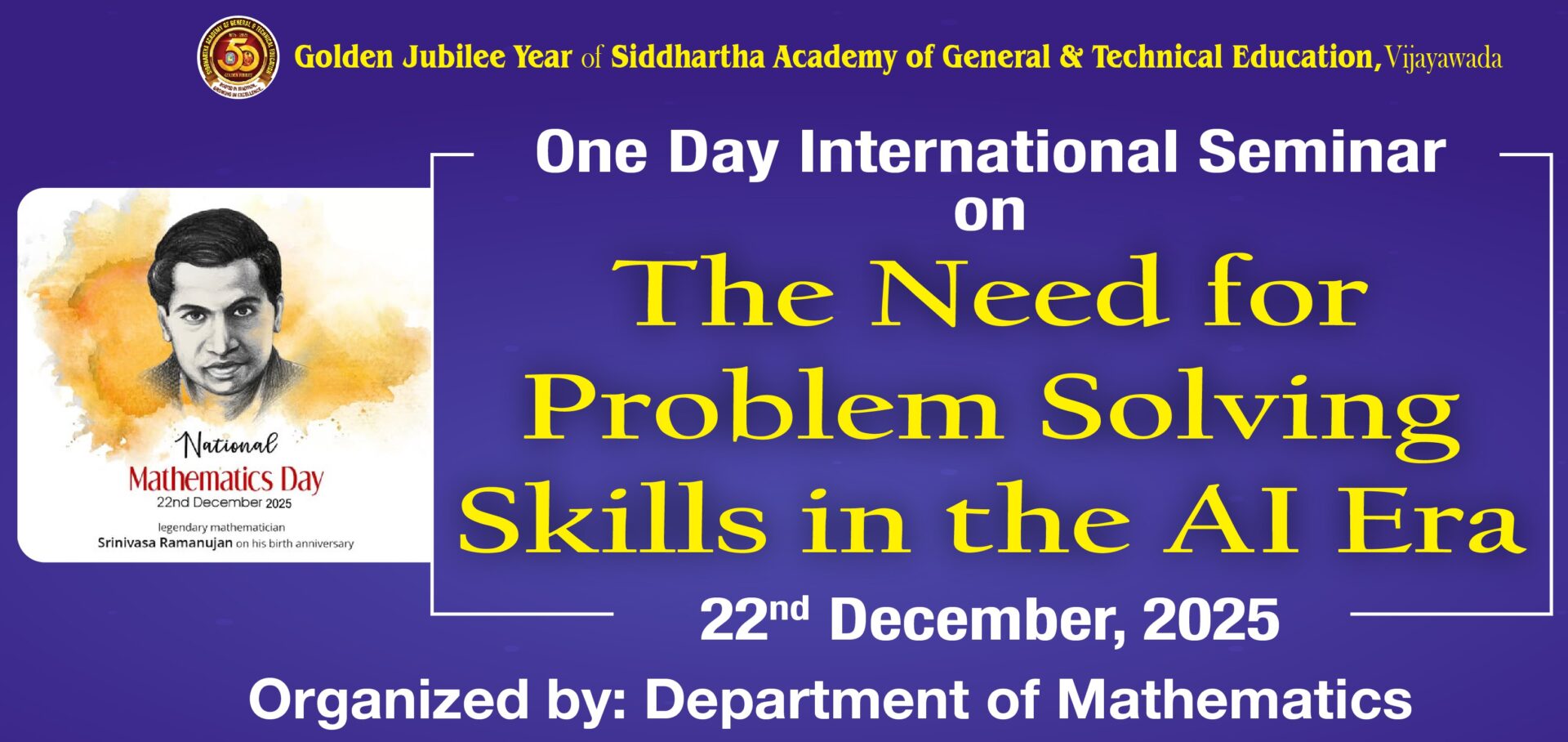
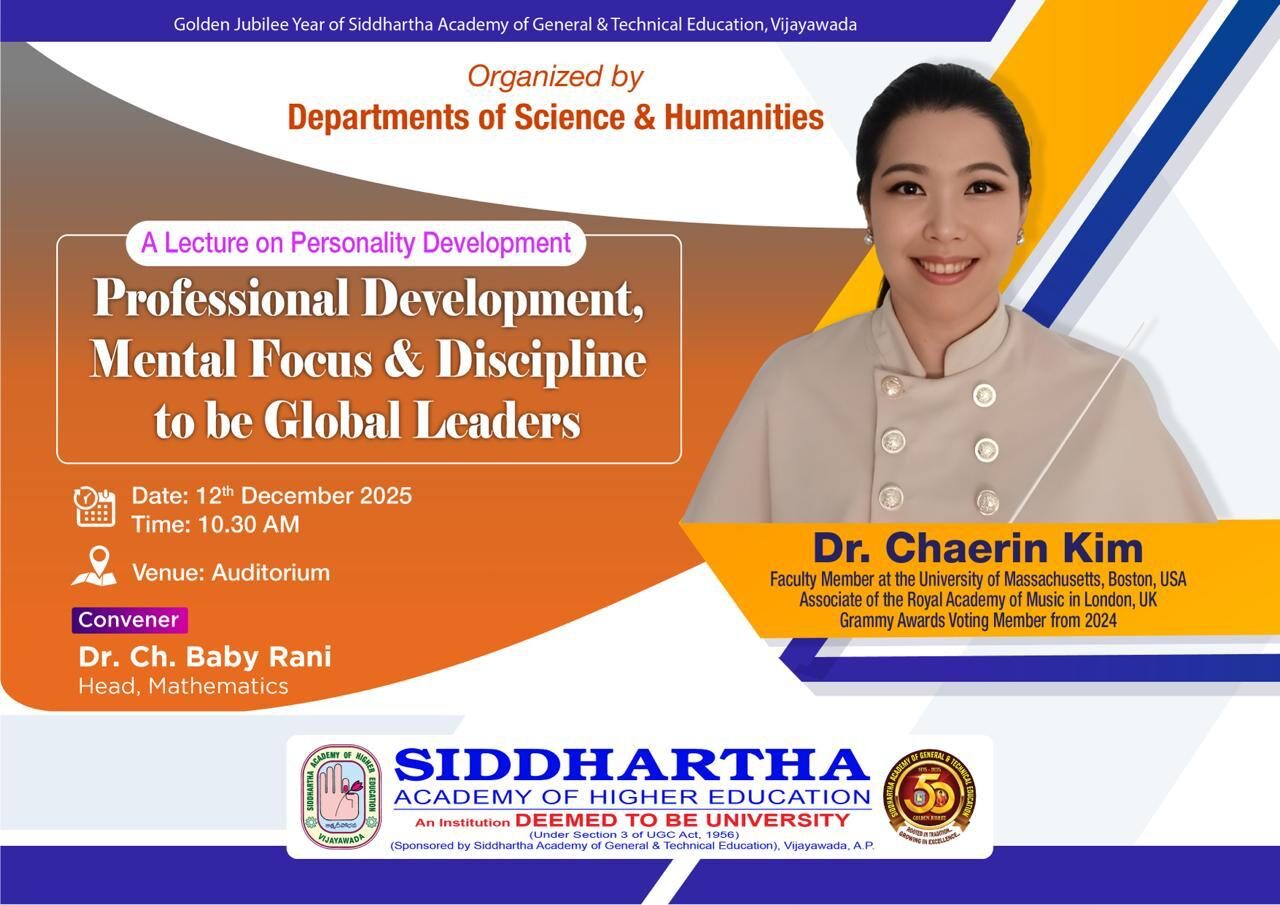
In addition to academic and research activities, the department regularly organizes workshops, seminars, guest lectures, and certificate courses focusing on both technical advancements and socially relevant issues, thereby enriching the learning experience and fostering holistic development among students.
Department of Maths
- Ph.D in Maths
- Linear Algebra, Series and Calculus
- Probability and Statistics
- Discrete Mathematics
- Basic Mathematics
- Statistical Techniques-I
- Probability
To emerge as a premier department of Mathematics, committed to excellence in teaching and research, nurturing innovation and analytical thinking, and shaping globally competent professionals.
- Vision
To impart strong, application-oriented mathematical knowledge in a collaborative and innovative learning environment
To develop analytical and critical thinking skills that enable students to solve real- world and multidisciplinary problems.
To prepare students for successful careers by equipping them with industry-relevant skills and adaptability.
To promote research, innovation, and lifelong learning in emerging and interdisciplinary areas.
To instil ethical values and social responsibility, nurturing graduates who contribute meaningfully to society.
- Mission
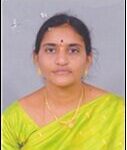
Dr. Ch.Baby Rani
Professor & Head
Welcome Message
“Mathematics, hailed as the queen of sciences” by Carl Fredrich, dreaded by many and loved by an equal number, has progressed rapidly since the beginning of recorded history.